Structural Drying and Dehumidification in Woodbury, MN
Wet framing, subfloors and walls hold moisture long after the water is gone. The crew sets dryers and dehumidifiers, takes meter readings, and keeps going until the structure is verified dry.
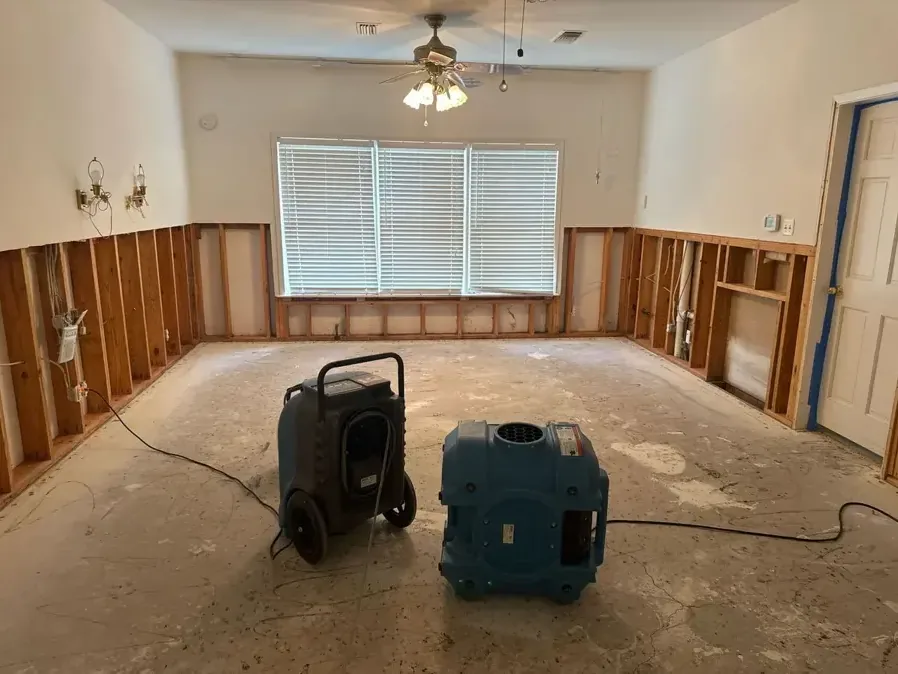
First steps for structural drying and dehumidification
- Stop the waterClose the source and get standing water out.
- Open the areaRemove baseboards and lift loose coverings.
- Keep the home closedWindows and doors stay shut while dryers run.
- Leave equipment aloneDo not turn units off before readings say dry.
How structural drying and dehumidification is handled
- 01Assess
Map the moisture
Meters mark which materials are wet.
- 02Remove
Place equipment
Air movers and dehumidifiers go in.
- 03Dry
Monitor daily
Readings are logged at set spots.
- 04Verify
Verify dry
Equipment leaves only at dry readings.
The drying goal: wet materials read within 2 to 4 points of a dry reference material in the same building. Equipment leaves on readings, not on a schedule.
What does structural drying and dehumidification cost in Woodbury, MN?
Structural drying in Woodbury costs $1,000 to $2,500 for a small area of light drying, $2,500 to $5,500 for a full room or level, and $4,500 to $8,500 for a heavy basement. Equipment time sets the figure.
- Few wet materials
- Short equipment run
- Fast readings
- Walls and subfloor
- Several dryers
- Daily meter checks
- Dense, deep moisture
- Specialty equipment
- Longest drying
Ranges are typical, not a quote: the water category, square footage, material class and how fast drying started move the number most. Run the water damage cost calculator for a closer planning range.
Pumping out water leaves most of the moisture behind. It sits in wood framing, subfloors, drywall and insulation, where it cannot be seen, and it only leaves if the air around it is managed. Structural drying is the job of moving that moisture out of the building and verifying it is gone, instead of trusting that a surface feels dry.
How drying equipment works
- Air movers push dry air across wet floors and wall bases
- Dehumidifiers pull moisture out of the air so it can keep absorbing more
- Wall cavities are opened or vented where moisture is trapped
- Moisture meters record progress at the same spots each day
The space is closed off so the equipment is working on the moisture in the structure, not on outside air.
Finished lower levels dry slowly
A local real estate description from 2026 calls many Stonemill Farms homes finished on the lower level. A finished level means carpet, pad, trim, drywall and insulation all hold water, so there is more material to dry and more places for moisture to hide. Those spaces are opened up where readings call for it.
Light jobs and heavy jobs
A small area of drywall or flooring is a light job and may need a short equipment run. A wet basement with thick framing and dense materials is a heavy job, since moisture sits deep and leaves slowly. Related work is covered under water extraction, basement flooding cleanup and sump pump failure cleanup.
Structural drying and dehumidification across Woodbury and nearby communities
Drying jobs run across ZIP codes 55125 and 55129, including Stonemill Farms, Bailey Lake, Eagle Valley and Dancing Waters, and homes by Radio Drive, Valley Creek Road, Interstate 94 and Interstate 494 where water has reached framing and floors.
The same service nearby: structural drying and dehumidification in Cottage Grove, Inver Grove Heights, Mendota Heights.
Structural Drying and Dehumidification questions in Woodbury, MN
What is structural drying and why does it matter?
It is the controlled removal of moisture from framing, subfloors and walls with air movers and dehumidifiers. It matters because trapped moisture causes swelling, odors and rot long after the surface looks dry.
How long does structural drying take?
Several days is typical, and thick or dense materials take longer. The finish line is set by meter readings, not by a calendar.
Why do dryers run when the floor already feels dry?
Surface dryness is deceptive. Moisture stays inside wood and drywall, so equipment keeps running until readings at the same spots match a dry reference.
Can a finished basement be dried without tearing it out?
Sometimes. Clean water caught early often allows drying in place, with small openings for airflow. Longer or dirtier exposures usually mean removing wet drywall and carpet first.
Are the dryers loud, and can they run overnight?
They hum steadily and run around the clock, because stopping lets moisture settle back in. Power and noise are part of the job, and the home stays closed while they work.
Is dehumidification part of structural drying?
Yes. Dehumidifiers pull moisture out of the air so the wet materials can keep releasing it. Air movers alone would only push damp air around the room.
Still dealing with it?
Describe the damage and the rooms involved, and the dryer and dehumidifier plan is built around the readings.
Dry the structure until the readings say it is done
Describe the damage and the rooms involved, and the dryer and dehumidifier plan is built around the readings.