Water Extraction and Removal in Woodbury, MN
Standing water does not wait. In Woodbury, the crew pumps it out, finds where it came from, and starts drying the floors and walls before the damage spreads.
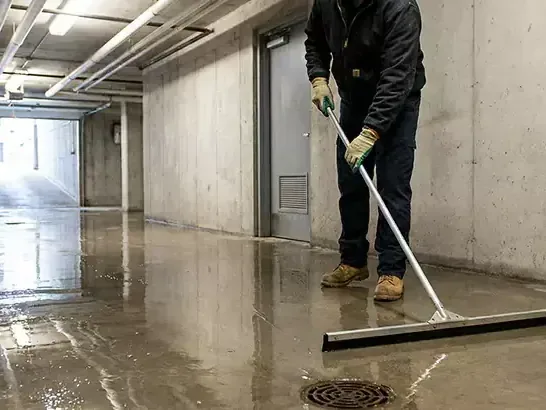
First steps for water extraction and removal
- Stop the sourceClose the valve at the fixture or main if it is safe.
- Keep power awayLeave wet outlets and cords alone until they are checked.
- Lift what you canRaise rugs, boxes and small furniture off soaked floors.
- Call for pumpingSay where the water stands and how deep it looks.
How water extraction and removal is handled
- 01Assess
Find the water
The crew checks the source, depth and water type first.
- 02Remove
Pump and vacuum
Pumps clear the depth, then wet vacuums finish the low spots.
- 03Dry
Pull moisture
Extractors lift water from carpet, pad and hard floors.
- 04Verify
Hand off to drying
Readings decide which materials stay and where dryers go.
The drying goal: wet materials read within 2 to 4 points of a dry reference material in the same building. Equipment leaves on readings, not on a schedule.
What does water extraction and removal cost in Woodbury, MN?
Water extraction in Woodbury costs $400 to $1,200 for a small area of clean water, $900 to $1,800 for a basement level, and $1,300 to $6,800 when drying is included. Water type, depth and wet materials set the final figure.
- One room or less
- Clean source water
- Quick pump and dry
- Full lower level
- Pumps and vacuums
- Floor checks follow
- Water removed first
- Dryers set in rooms
- Readings until dry
Ranges are typical, not a quote: the water category, square footage, material class and how fast drying started move the number most. Run the water damage cost calculator for a closer planning range.
Extraction is the first real job on most wet floors. Until the water is out, nothing else can dry, and the longer it sits, the deeper it travels into subfloor, baseboard and drywall. In Woodbury, the work begins by working out whether the water came from inside the house or from outside.
Where the water came from
- A failed supply hose, pipe joint or appliance inside a wall or under a floor
- Rain runoff working in at a window well, a low door or the lower level
- A backed up drain, which counts as contaminated water
- Snow melt or a heavy storm collecting beside the house
The city moves its stormwater through catch basins, storm sewers, creeks, ponds, wetlands, ditches and lakes such as Powers Lake and Wilmes Lake, so outdoor water has plenty of places to gather in a heavy rain. Once it gets inside, its source decides how the cleanup is handled.
How the water comes out
Pumps handle depth first. Wet vacuums follow to clear what is left in corners and low spots, and weighted extractors press water out of carpet and pad. Hard floors get squeegeed toward a drain or a pump so nothing is left to wick into the subfloor.
Deep water in a lower level is covered in more detail under basement flooding cleanup.
What happens after the water is out
Pulling the water is only the first half of the job. Moisture meters check the floor, baseboards and lower walls, and wet insulation or soaked drywall is cut out if it will not dry. Dehumidifiers and air movers then take over, which is covered under structural drying.
Water extraction and removal across Woodbury and nearby communities
Jobs run across both Woodbury ZIP codes, 55125 and 55129, in neighborhoods such as Dancing Waters, Stonemill Farms, Bailey Lake and Eagle Valley, and in homes along Radio Drive, Valley Creek Road and the Interstate 94 and Interstate 494 corridors.
The same service nearby: water extraction and removal in Cottage Grove, Inver Grove Heights, Mendota Heights.
Water Extraction and Removal questions in Woodbury, MN
What does water extraction involve?
Pumps and wet vacuums remove standing water, then extractors lift what is soaked into carpet, pad and hard floors. The removal stops further spread, and drying equipment takes over from there.
How fast should extraction start after a leak?
As early as possible. Water keeps moving into subfloors, baseboards and drywall for as long as it sits, so waiting adds hours of damage and widens what has to be dried.
Is rain runoff treated differently from a leak?
The removal steps are similar, but the source matters. Runoff carries soil and can be gray or worse, so affected materials are judged by the water type, not just how wet they look.
Can carpet be saved after extraction?
Often, when it is lifted and extracted early and the pad is handled right. Clean water on carpet is more forgiving than gray water, which usually means the pad and sometimes the carpet go.
Does water extraction need drying afterward?
Yes. Extraction removes the visible water, but moisture stays in framing, subfloors and drywall. Dryers and moisture readings finish the job and show when materials are actually dry.
What should be ready before extraction starts?
A clear path to the wet area, the location of the main shutoff, and a note of when the water was noticed. Photos of the damage before anything is moved help with insurance paperwork.
Still dealing with it?
Describe the damage on the call, and the right pumps and dryers are lined up.
Get the water out before it reaches the subfloor
Describe the damage on the call, and the right pumps and dryers are lined up.