Water Extraction and Removal in Cottage Grove, MN
Every hour standing water sits, it wicks higher into drywall and deeper into pad. The extraction crew pulls it out with truck-mounted and portable units, then sets drying equipment before leaving.
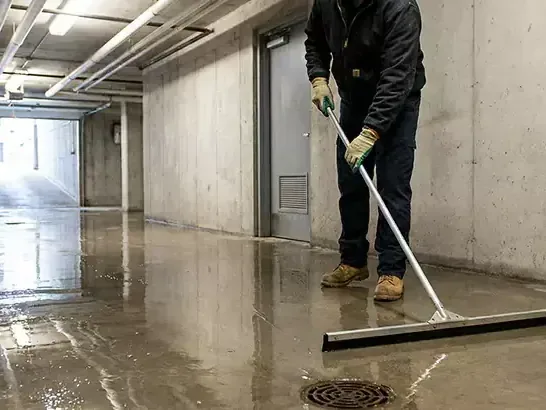
First steps for water extraction and removal
- Stop the sourceClose the main valve or the valve at the failed fixture.
- Kill power safelyCut breakers to wet rooms only from a dry spot.
- Move what you canLift rugs, boxes and electronics off wet floors.
- Leave the carpet downPulling it up early tears the pad and spreads water further.
How water extraction and removal is handled
- 01Assess
Find the edge
Meters trace how far the water spread.
- 02Remove
Pump the deep water
Submersibles clear water standing on the slab.
- 03Dry
Extract the carpet
Weighted wands press water out of the pad.
- 04Verify
Set the drying
Air movers and LGR go in before the crew leaves.
The drying goal: wet materials read within 2 to 4 points of a dry reference material in the same building. Equipment leaves on readings, not on a schedule.
What does water extraction and removal cost in Cottage Grove, MN?
Water extraction here typically runs $400 to $1,800 on its own, and most jobs bundle it with drying for $1,300 to $6,800 in total. Deeper water, more square footage and Category 3 water push the number higher.
- One room
- Truck-mounted extraction
- Readings logged
- Submersible pump-out
- Carpet and pad extraction
- Floor drain checked
- Extraction first
- Air movers and LGR
- 3 to 5 days of equipment
Ranges are typical, not a quote: the water category, square footage, material class and how fast drying started move the number most. Run the water damage cost calculator for a closer planning range.
Extraction is the first and cheapest part of any dry-out. A truck-mounted unit removes water many times faster than evaporation can, so every gallon pulled out of the carpet and off the slab is a gallon the dehumidifiers never have to handle. In a home with a finished lower level, fast extraction is often the difference between drying the carpet in place and tearing it out.
How the water gets pulled out
The crew starts with the deepest water, using submersible pumps where it stands on the slab, then moves to truck-mounted wands. Weighted extraction tools press water out of carpet pad that a standard wand leaves behind. Water trapped under vinyl plank or laminate is drawn out through floor drying mats.
Where extraction calls come from here
Most of them land in basements. Many ramblers from the 1950s and 1960s sit on cinder-block foundations that keep releasing water after the floor is clear, so the crew reads the block, not just the carpet.
- Sump pit overflow in storm season
- Water heater and washer failures in the utility room
- Snowmelt seepage where the wall meets the floor
After the water is out
Extraction ends when the wands stop pulling water, not when the floor looks dry. Readings then set the plan for structural drying, and air movers and LGR dehumidifiers go in before the crew leaves. The Ready.gov flood page covers what to do before and after high water, and the EPA WaterSense program explains how to spot hidden leaks early.
Water extraction and removal across the city and the east metro
The restoration team covers ZIP 55016 end to end, from Old Cottage Grove and Langdon to the Thompson Grove ramblers west of Highway 61, River Acres and Grey Cloud Island on the Mississippi, and the newer streets off Ravine Parkway in East Ravine.
Nearby coverage reaches Woodbury, Inver Grove Heights, Hastings, Rosemount, Mendota Heights.
Water Extraction and Removal questions in Cottage Grove, MN
How soon should water extraction start?
As soon as possible. Water keeps wicking into drywall and pad, and drying that starts within 24 to 48 hours saves the most material. Dispatch runs 24/7, so start the first steps while the crew is on the way.
Can a shop vacuum handle it?
For a small spill, yes. For anything that soaked carpet or reached a finished basement, a shop vacuum leaves most of the water in the pad. Truck-mounted extraction removes far more, far faster.
Will the carpet be saved?
Often, when the water is clean and extraction starts early. Carpet touched by sewage or river water comes out. Pad is cheaper to replace than to dry and is usually pulled in Category 2 losses.
Does water extraction include drying?
Extraction removes the liquid water. Drying removes the moisture left in the materials. Both are needed, and air movers and dehumidifiers go in right after extraction.
How is water pulled from under laminate?
Floor drying mats and suction panels draw water out from under vinyl plank and laminate. Some planks still need to come up when water sits on the subfloor.
What does water extraction cost?
Usually $400 to $1,800 on its own, more with drying. The water category, the square footage and the depth of the water set the price.
Still dealing with it?
Truck-mounted extraction, then structural drying to the IICRC S500 goal, day or night.
Standing water spreads every hour. Get it out first.
Truck-mounted extraction, then structural drying to the IICRC S500 goal, day or night.