Basement Flooding Cleanup in Cottage Grove, MN
A flooded basement soaks carpet, pad, drywall and the bottom plates of every finished wall at once. The restoration team pumps it out, opens what the meters flag and dries the block and slab to a verified reading.
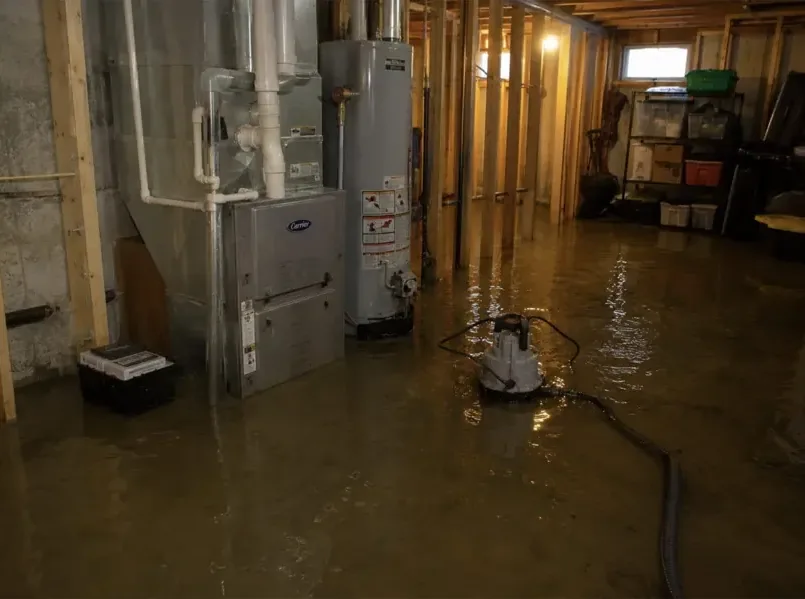
First steps for basement flooding cleanup
- Shut off power downstairsCut basement breakers only from a dry spot.
- Find the sourceCheck the sump, the floor drain and the water heater.
- Raise belongingsMove boxes and electronics to a dry level.
- Keep the furnace offDo not run equipment that sat in water.
How basement flooding cleanup is handled
- 01Assess
Pump out
Submersibles clear standing water from the slab.
- 02Remove
Map moisture
Meters and thermal imaging find wet walls.
- 03Dry
Remove and cut
Wet pad and drywall come out where needed.
- 04Verify
Dry and verify
LGR and air movers run until readings pass.
The drying goal: wet materials read within 2 to 4 points of a dry reference material in the same building. Equipment leaves on readings, not on a schedule.
What does basement flooding cleanup cost in Cottage Grove, MN?
Basement flooding cleanup here typically runs $1,500 to $22,000, a wide range because basements vary so much. An unfinished space with clean water sits near the low end; a finished lower level with a Category 3 source sits near the top.
- Pump-out
- Slab and block drying
- Readings logged
- Carpet and pad decisions
- Flood cuts
- 4 to 7 days drying
- Porous materials removed
- Antimicrobial applied
- Rebuild-ready drying
Ranges are typical, not a quote: the water category, square footage, material class and how fast drying started move the number most. Run the water damage cost calculator for a closer planning range.
Most homes here have a basement, and most of those basements were finished at some point, often in stages over the decades. When water covers that floor it reaches carpet, pad, drywall, insulation and the wood plates at the base of every wall, so cleanup is about finding everything wet, not only what looks wet.
Where basement water comes from
The source sets the category and the plan. Clean water from a burst pipe or a water heater is Category 1. Sump overflow and seepage are usually Category 2. A floor drain backup or river water is Category 3, and porous materials it touched come out.
- A sump pump failure in a summer storm
- A floor drain backup from the sewer
- Seepage at the joint between the block wall and the floor
- A water heater or washer failure in the utility room
Block walls and finished rooms
Many ramblers built from the 1950s on sit on cinder-block foundations, and block holds water inside its cores long after the surface feels dry. Finished walls built against that block hide wet insulation and framing. The crew uses thermal imaging and meters to decide where to cut, then makes flood cuts above the water mark so each cavity can dry.
Drying the lower level
Basements dry slowly because the air is cool and the slab and block release water for days. LGR dehumidifiers pull that moisture out, and heat is added when the space is cold. For storm and flood planning, see the Ready.gov flood page and FloodSmart, the federal flood insurance site.
Basement flooding cleanup across the city and the east metro
The restoration team covers ZIP 55016 end to end, from Old Cottage Grove and Langdon to the Thompson Grove ramblers west of Highway 61, River Acres and Grey Cloud Island on the Mississippi, and the newer streets off Ravine Parkway in East Ravine.
Nearby coverage reaches Woodbury, Inver Grove Heights, Hastings, Rosemount, Mendota Heights.
Basement Flooding Cleanup questions in Cottage Grove, MN
Does all the basement carpet have to come out?
Not always. Carpet soaked by clean water can often be dried in place if extraction starts early, though the pad is usually replaced. Carpet touched by sewage or river water comes out.
How long does a flooded basement take to dry?
Usually four to seven days. Cool air and block walls slow drying, so LGR dehumidifiers and sometimes added heat are used. Equipment stays until the readings reach the goal.
Why cut drywall that looks dry?
The face of the board can look dry while the insulation and the bottom plate behind it stay wet. Flood cuts above the water mark open the cavity so it can dry.
Is basement flooding covered by insurance?
It depends on the source. A burst pipe is often covered, seepage and surface water usually are not, and sewer backups often need an endorsement. Check your own policy.
Can the furnace and water heater still be used?
Not if they sat in water. Have them checked by a qualified technician before running them again.
What does basement flooding cleanup cost?
Usually $1,500 to $22,000, depending on whether the space is finished, the water category and how much material comes out.
Still dealing with it?
Pump-out, flood cuts and structural drying for finished basements, around the clock.
Water downstairs? Get the lower level dry and documented.
Pump-out, flood cuts and structural drying for finished basements, around the clock.