Structural Drying and Dehumidification in Hastings, MN
Spring river and snowmelt water, wet early summers and ordinary leaks all leave moisture inside framing and floors. Air movers and dehumidifiers pull it out, and readings decide when the equipment leaves.
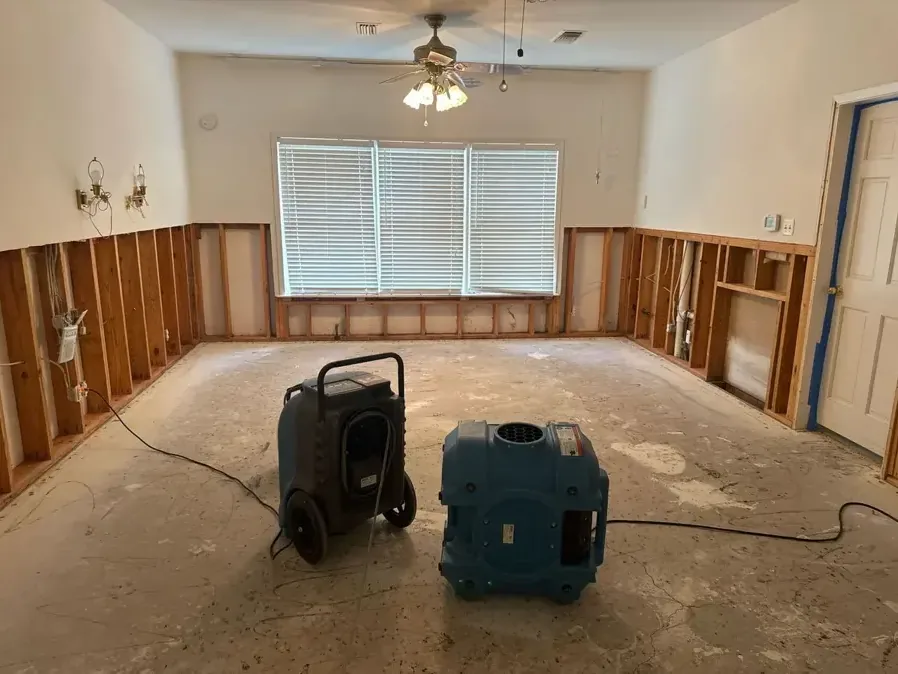
First steps for structural drying and dehumidification
- Map the moistureMeters and a thermal camera mark every wet area.
- Place the equipmentAir movers and dehumidifiers go where the readings call for them.
- Read and adjustReadings are taken at each visit and equipment is moved.
- Verify and removeEquipment leaves only when every material reads dry.
How structural drying and dehumidification is handled
- 01Assess
Map the wet areas
Meters mark every wet surface and cavity.
- 02Remove
Set the equipment
Units go where readings call for them.
- 03Dry
Adjust
Layout changes as materials dry.
- 04Verify
Verify
Every material must read dry.
The drying goal: wet materials read within 2 to 4 points of a dry reference material in the same building. Equipment leaves on readings, not on a schedule.
What does structural drying and dehumidification cost in Hastings, MN?
A small area usually costs $1,000 to $2,500 to dry, a full room or level runs $2,500 to $5,500, and a basement with deep, dense materials runs $4,500 to $8,500.
- Few air movers
- One dehumidifier
- Short run of readings
- Several air movers
- Dehumidifier running
- Readings at each visit
- Heavy equipment load
- Concrete and framing
- Extended readings log
Ranges are typical, not a quote: the water category, square footage, material class and how fast drying started move the number most. Run the water damage cost calculator for a closer planning range.
Removing the water is only half of a restoration. Wood, drywall and concrete keep holding moisture after the surface looks dry, and that hidden water is what causes swelling, warping and lasting damage. Structural drying removes it in a controlled way. Hastings jobs follow the same method whether the water came from a river rise or a broken pipe.
How drying equipment works
- Air movers push dry air across wet surfaces to lift moisture
- Dehumidifiers pull that moisture out of the air and drain it away
- Drying mats and cavity drying pull water from floors and walls
- Meters track each material so settings change as it dries
Doors and windows stay closed so the equipment dries the structure instead of the outdoors. The layout is changed as readings fall, because wet areas shrink and dry areas need less airflow.
Seasons that slow drying
June is the wettest month at Lock and Dam No. 2, averaging 4.94 inches of precipitation, and the July mean daily maximum is 83.0 degrees Fahrenheit. Humid early summer air makes dehumidifiers work harder, while spring river and snowmelt water can leave concrete and framing damp for longer. Equipment settings are adjusted to the weather rather than a fixed schedule.
When the equipment leaves
Equipment is removed only when every wet material reads at the dry standard, not when a room feels dry. The final readings, photos and equipment log go to the owner and the insurer. Drying usually follows water extraction or basement flooding cleanup.
Structural drying and dehumidification across Hastings and nearby communities
The crew covers ZIP 55033, including Downtown Hastings and East Hastings, the Minnesota Highway 55 and Vermillion Street corridors, and the blocks closest to the Mississippi and Vermillion rivers, wherever water has left framing, subfloor or concrete damp.
The same service nearby: structural drying and dehumidification in Cottage Grove, Rosemount, Inver Grove Heights.
Structural Drying and Dehumidification questions in Hastings, MN
What does structural drying actually do?
It removes moisture that is trapped inside framing, subfloor, drywall and concrete, using air movers to move dry air across the surfaces and dehumidifiers to pull the water out of the air.
How is a material judged dry?
Meters compare each reading with an unaffected reference of the same material. Equipment stays until the wet material reaches that dry standard, and the final numbers are written into the report.
Can wet drywall be dried instead of replaced?
Sometimes. Drywall that stayed firm and had only clean water on it can often be dried in place, but soft, stained or contaminated drywall is cut out because it will not recover.
How long does structural drying take?
Most jobs run several days. Dense materials such as concrete and thick framing dry slowest, and a humid week can add more, so readings rather than a calendar decide when equipment leaves.
Is the equipment loud or hard to live with?
Air movers and dehumidifiers hum all day, and some rooms are off limits while they run. The crew explains where each unit goes and which rooms can still be used.
Still dealing with it?
Say which rooms are wet and what the water came from, and a drying plan with readings follows.
Wet framing or floors in a Hastings home? Call now, any hour
Say which rooms are wet and what the water came from, and a drying plan with readings follows.