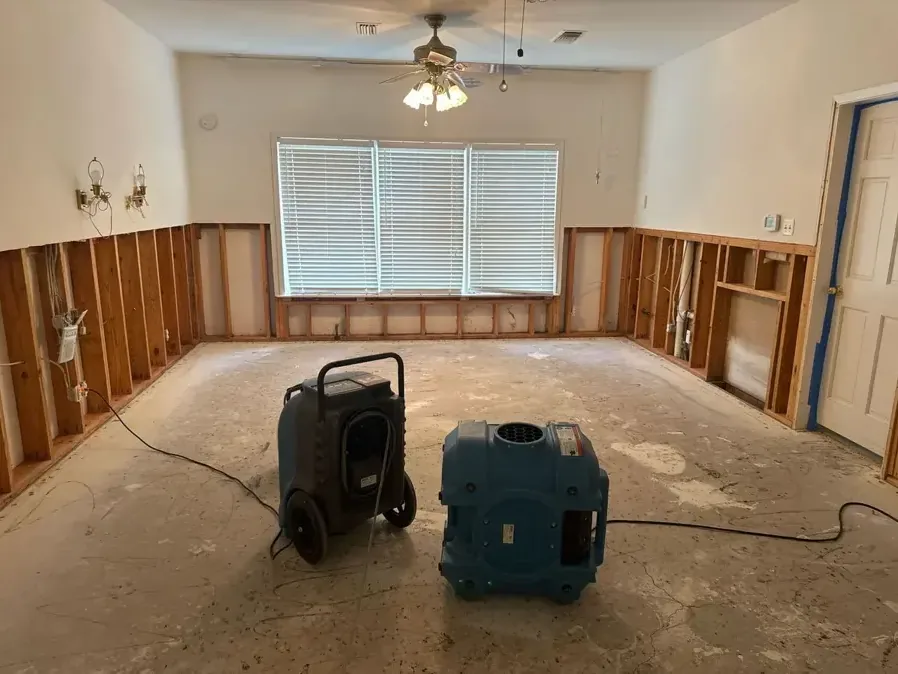
A finished lower level feels like part of the main house, but when water reaches it the extra finishes become extra work. In Woodbury, where Stonemill Farms is described as a master planned community with many homes that have finished lower levels, that matters.
Key takeaways
- A finished lower level holds more water than a bare basement because carpet, pad, drywall, insulation and trim all soak it up.
- Stonemill Farms is described as a master planned community with a clubhouse and pool, where many homes have finished lower levels.
- Moisture readings, not appearance, decide which materials stay and which are removed.
- Water reaches a lower level from a failed sump pump, a drain backup, an appliance or a pipe, and the source changes the cleanup.
- Woodbury manages stormwater through catch basins, storm sewers, creeks, ponds, wetlands, lakes and ditches.
Why a finished lower level costs more to dry
A bare basement is concrete, block and a few exposed joists. When water arrives, it can be pumped out and the surfaces dried.
A finished lower level adds layers: carpet over pad, drywall over framing, insulation in the walls, baseboard, doors and cabinets. Each layer can hold water, and each one can hide it.
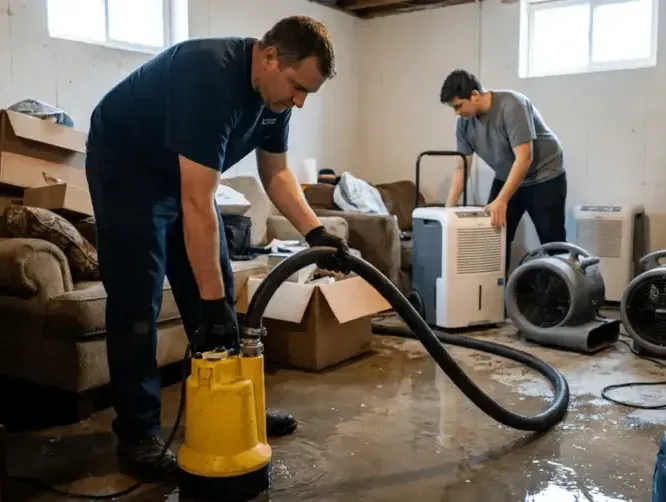
Pumps and extraction units remove the standing water first, and water extraction is the first step before any material is opened.
Floors
Carpet and pad soak up water quickly, and pad holds it long after the carpet surface feels dry. Pad is usually removed, and carpet is lifted so the slab can dry.
Walls and ceilings
Drywall wicks water upward from the bottom edge. Insulation behind it can stay wet well above the visible stain.
Ceilings below an upper floor leak take on water through light fixtures and seams, and they can hold more than they show.
Rooms that complicate the drying
A finished lower level often contains more than one kind of room, and each has its own materials.
Each room is read separately, because water that is dry in one room can still sit in the wall of the next.
- Bathrooms: tile, vanity cabinets and a tub or shower surround.
- A bar or kitchenette: cabinets, appliances and plumbing.
- A media room: built in cabinetry, wall panels and wiring.
- The mechanical room: a furnace, a water heater and the main shutoff.
- Closets and storage rooms: carpet that runs behind doors and under shelving.
Why speed matters for finished materials
Wet drywall and trim begin to break down, wood swells and finishes lift. The sooner the water is out, the more material can be saved.
Delay turns drying into replacement, and replacement is the larger part of the cost.
How water reaches a finished lower level
The path matters because it sets the cleanup. Clean water from a pipe is handled one way, and water that came through a drain is handled another.
- A failed sump pump or a power cut sends groundwater into the pit and across the floor.
- A sewer or drain backup brings contaminated water that calls for a different process.
- A burst pipe or failed appliance sends clean water down through ceilings and walls.
- Heavy rain can overwhelm window wells and exterior doors.
What a sump pump failure leaves behind
When a pump stalls, groundwater collects in the pit, spills over the rim and spreads across the slab. A sump pump failure cleanup begins by removing that water and finding why the pump stopped.
In a finished lower level, the water reaches the bottom of every wall in the room. That is why even a shallow flood can touch drywall, baseboard and cabinet bases all at once.
What moisture readings decide
Moisture meters read framing, drywall and concrete. Thermal cameras help locate wet areas behind finished surfaces without cutting everything open.
Readings are taken on a grid so the same spots can be checked on each visit. A wall that read wet on the first day should read lower on each return, and a spot that stalls points to water still trapped inside.
- Drywall that reads wet well above the stain is cut back to where readings drop.
- Baseboard is removed so the bottom of the wall can dry.
- Insulation behind wet drywall is usually removed.
- Framing and concrete are dried in place with dehumidifiers and fans.
- The job ends when readings match a dry reference, not when the surface looks normal.
Stormwater and the Woodbury drainage picture
The city has a stormwater drainage utility inside public works. The system includes catch basins, storm sewers, creeks, ponds, wetlands, lakes, lift stations and ditches, and it also handles runoff from neighboring cities including Afton, Lake Elmo and Maplewood.
For homeowners this is background, not a forecast. It does not say that any particular neighborhood floods.
What it does mean is that a long rain moves through many pieces of public drainage before it reaches a house. The homeowner side of that chain is gutters, grading, window wells and the sump pump.
What stays and what goes
The basement flooding cleanup approach sorts materials by how long they sat wet and what kind of water they met.
- Carpet pad: removed.
- Carpet: lifted and cleaned or replaced, depending on the water source.
- Drywall: cut to the highest wet reading.
- Cabinets and built ins: judged by how long they sat wet.
- Hard floors: lifted if water is trapped underneath.
Questions to ask before work starts
A finished lower level has many surfaces, so a clear record of what was removed and why protects the homeowner later.
- Which materials are coming out, and what readings support removing them?
- Where will equipment run, and how long is it expected to stay?
- How will progress be recorded on each visit?
- What happens if a reading stops improving?
Drying, documenting and talking to the insurer
Structural drying keeps equipment running while readings are logged on each visit, so the record shows when the structure reached a dry reference.
Many policies treat sump pump and sewer backup water separately from other water damage, so the wording is worth reading before a loss. Photographs of each finished surface taken before removal help the claim.
A drying record also helps when the lower level is rebuilt, because the contractor can see which walls were opened and which were left in place.
Questions
Why does a finished lower level take longer to dry?
It holds water in more places: carpet, pad, drywall, insulation, baseboard and cabinet bases. Each layer has to be checked and dried or removed.
Is carpet pad ever dried and reused?
Rarely. Pad holds water and breaks down, so it is usually removed even when the carpet above it can be cleaned.
How far up the wall does drywall need to be cut?
To the point where moisture readings return to normal, which is often higher than the visible stain.
What is Stonemill Farms?
A Woodbury master planned community with a clubhouse and pool, where many homes are described as having finished lower levels.
Can wet drywall be saved?
Sometimes. Drywall that stayed wet briefly and is clean can be dried in place, but drywall that wicked water high or touched contaminated water is cut out.
How does a crew know a wall is dry?
Meter readings in the framing and drywall are compared with a dry reference from an unaffected area of the same material.