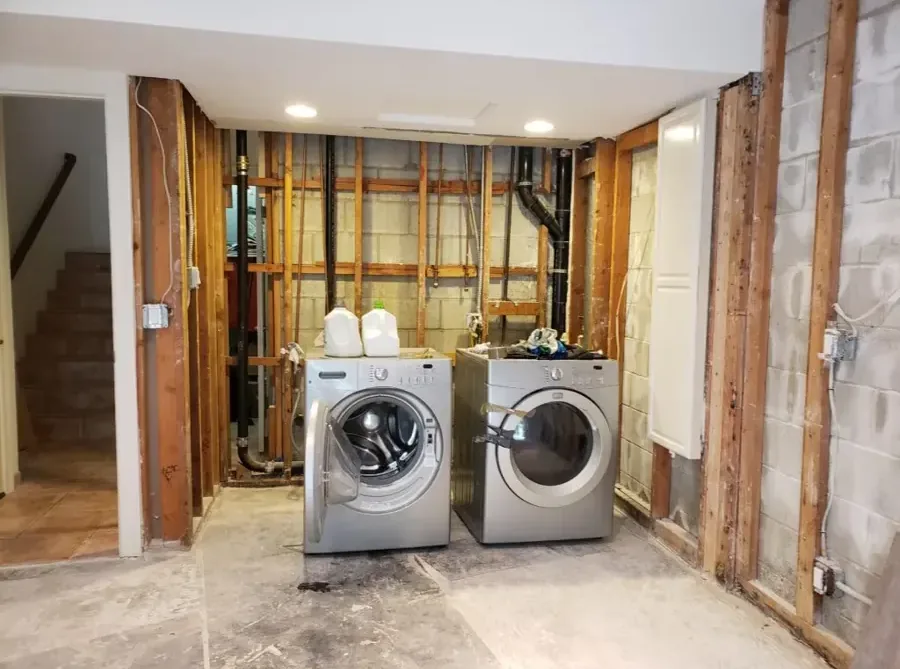
Rosemount grew from 14,619 people in 2000 to 25,650 at the 2020 census, and many of its households run a washer, a dishwasher and a refrigerator every day. Appliances that work that hard eventually leak.
Key takeaways
- Rosemount counted 8,931 households in 2020, and 41.9 percent of them had children under 18 living in them.
- Washer supply hoses, dishwasher drains and ice maker tubes are common leak points.
- A slow leak behind or under an appliance can soak flooring and cabinets for days before anyone sees it.
- Shutting off the appliance's water valve and power is the first step.
- Drying under cabinets and flooring uses moisture readings to decide what is opened.
Why busy households see more appliance leaks
The city population grew from 14,619 in 2000 to 21,874 in 2010 and 25,650 in 2020. The median age at the 2020 census was 37.8 years.
With 8,931 households in 2020 and 41.9 percent of them including children under 18, laundry and dishes run often. More cycles mean more wear on hoses and seals.
Higher use is not the only factor. Hoses age, seals dry out and fittings loosen, so a leak is often the end of a slow process rather than a sudden failure.
Where the leaks start
Washers
Supply hoses under constant pressure can bulge, crack or loosen at the fittings. A drain hose that slips out of its standpipe sends water across the floor with every cycle.
Dishwashers
Door seals, supply connections and drain hoses can all weep. Water often travels under the cabinet toe kick before it shows.
Refrigerators and ice makers
A thin water tube feeds the ice maker. A pinhole or loose fitting can drip for weeks behind the unit.
A refrigerator sits flush against the wall, so a pinhole in its water tube can drip for weeks without a puddle on the open floor.
The first sign is often a swollen board under the unit or flooring that has gone soft at the edge of the kitchen.
Why appliance leaks hide
Water from an appliance usually runs along a pipe or hose, drops to the subfloor and spreads sideways. By the time it shows, it has often traveled under a floor or into a cabinet base.
Because the appliance sits in front of the leak, nobody looks behind it until the damage is visible.
Signs of a slow leak
Slow leaks rarely announce themselves. They show up as small changes that are easy to dismiss.
- A musty or damp smell near the kitchen or laundry area.
- A floor that feels soft, cupped or bouncy near an appliance.
- Cabinet doors that stick or toe kicks that swell.
- Paint bubbling on a wall next to the appliance.
- A water bill that climbs without a change in use.
When the laundry is upstairs
When the laundry room is on an upper floor, a leak does not stay put. Water drops through the floor into the ceiling below, soaks the insulation and shows up as a stain in a different room.
- A ceiling stain below a laundry room or bathroom is a cue to check the appliances above.
- Light fixtures can fill with water, so they stay off until the ceiling is opened.
- A small opening lets trapped water drain instead of letting the ceiling bulge and fail.
- The room below is dried along with the room above, even when its floor looks dry.
The first steps when water is found
These steps keep a small leak small. The rest of the work is finding where the water went.
Speed matters for the cabinet base and the subfloor, which start absorbing water the moment it escapes.
- Shut the appliance's own water valve, or the main shutoff if the valve will not turn.
- Unplug the appliance only if the cord and outlet are dry.
- Remove standing water with a wet vacuum or towels.
- Pull the appliance out only when it is safe; water under it keeps spreading.
- Photograph the leak, the appliance label and the damage.
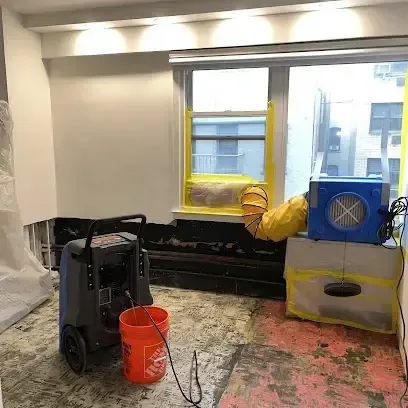
Drying under floors and cabinets
Water from an appliance leak often runs under the flooring or into the cabinet base rather than staying on the surface. Appliance leak water damage cleanup starts by tracing where the water went.
Toe kicks are removed, and small openings allow warm air under the cabinets. Flooring is lifted where readings show trapped water.
Water extraction and structural drying then work together, with readings logged until the cabinet base and subfloor reach a dry reference.
How the drying is checked
Moisture meters read the cabinet base, the subfloor and the bottom of the walls. Readings are compared with a dry area of the same material so the target is clear.
Fans and dehumidifiers run until the readings match. A cabinet base that feels dry to the hand can still be wet inside.
What happens under different floors
Hardwood
Hardwood cups as the boards take on water from below. Drying mats can sometimes save boards, but boards that have cupped badly are replaced.
Vinyl and laminate
Laminate swells at the seams and vinyl traps water beneath it. Both are lifted so the subfloor can dry.
Tile
Tile itself is not harmed, but water under it and in the joints keeps the subfloor wet. Readings show whether the tile has to come up.
Prevention for busy homes
The Building Permits and Inspections Department enforces plumbing codes in the city, so questions about changing supply connections can start there. The Rosemount water damage pages list the other services for a home with a leak.
- Replace rubber washer hoses with braided hoses on a regular schedule.
- Check hose fittings for drips regularly.
- Avoid running the washer or dishwasher when no one is home or overnight.
- Keep a clear space behind the refrigerator to spot drips.
- Know where each appliance shutoff valve is.
- Set a drain pan under an upstairs washer so a small leak has somewhere to go.
- Close the washer shutoff valves before a long trip away from home.
Insurance and records
Photographs of the appliance, the leak source and the damaged floor help a claim. Policies often treat a sudden leak differently from a long running one, so the date the leak started matters.
A record of the moisture readings from each drying visit shows that the structure was dried properly.
Questions
How can a slow leak be spotted?
Look for musty smells, soft or cupped flooring, swollen toe kicks and bubbling paint near the appliance.
Should the appliance be unplugged during a leak?
Only if the cord and outlet are dry. If water is near the outlet, power to the area is turned off at the panel from a dry spot.
Why are cabinet bases opened after a dishwasher leak?
Water travels under the toe kick and into the cabinet base, where it cannot dry on its own.
Who enforces plumbing codes in the city?
The Building Permits and Inspections Department enforces state building codes and city ordinances, including plumbing.
What happens to flooring after an appliance leak?
Hardwood may cup, laminate may swell and vinyl can trap water. Flooring is lifted where readings show water underneath.
Does an appliance leak need a plumber and a drying crew?
Usually both. A plumber replaces the failed hose or valve, and the drying crew removes the water and dries the structure. They work in different sequences.