Water Extraction and Removal in Rosemount, MN
Standing water on a floor keeps working its way into walls, pad and subfloor, so pumps and wands pull it out before drying equipment is set in place.
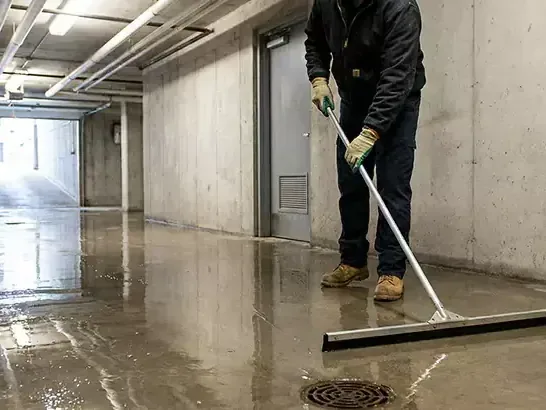
First steps for water extraction and removal
- Find the sourceThe leak or backup is shut off or confirmed stopped before any pumping starts.
- Check the categoryClean, gray or contaminated water changes which materials can stay.
- Extract by surfacePumps, wands or vacuums are matched to hard floors, carpet or tight spaces.
- Hand off to dryingMeter readings show what still holds water and where equipment goes next.
How water extraction and removal is handled
- 01Assess
Walk the loss
The technician checks the source, water type and spread.
- 02Remove
Set up pumps
Pumps and wands are placed by floor type and water depth.
- 03Dry
Pull it out
Water is drawn off until surfaces stop yielding more.
- 04Verify
Plan the drying
Readings decide where air movers and dehumidifiers go.
The drying goal: wet materials read within 2 to 4 points of a dry reference material in the same building. Equipment leaves on readings, not on a schedule.
What does water extraction and removal cost in Rosemount, MN?
Extraction alone usually costs $400 to $1,200 for a small clean water area and $900 to $1,800 at basement level. Extraction followed by drying runs $1,300 to $6,800, depending on size and water category.
- One room affected
- Pumps and wands
- Quick meter check
- Deeper pooled water
- Pump plus vacuum
- Floor drain cleared
- Extraction first
- Equipment runs days
- Readings logged
Ranges are typical, not a quote: the water category, square footage, material class and how fast drying started move the number most. Run the water damage cost calculator for a closer planning range.
Extraction is the first real step of a water damage job in Rosemount, and speed matters because drywall, carpet pad and subfloor absorb water quickly. The crew confirms the source is stopped, checks whether the water is clean, gray or contaminated, and picks pumps or wands to match the surface. Homes here vary in age and build, so each floor is checked rather than assumed.
Tools matched to the surface
- Portable pumps for deeper pooled water on hard floors
- Weighted wands that press water out of carpet and pad
- Wet vacuums for corners, stairs and tight rooms
- Squeegees that push thin water toward a drain
Truck mounted units handle large volumes, while portable machines reach upstairs rooms and finished spaces where hoses cannot run far. The choice depends on how much water stands and how it got there.
When carpet can stay
Clean water caught early often lets carpet and pad be dried in place, because the extraction pulls out most of the load before it spreads. Water that sat for days, or that carries contamination, changes the answer, and pad is usually removed while the carpet is checked for reuse. Moisture meters decide which path applies.
What happens after the water is out
Extraction does not finish a job. Walls, subfloors and framing still hold moisture, so drying equipment is placed and readings are logged until wet areas test dry. That stage is covered under structural drying. If a lower level is involved, basement flooding cleanup covers the added steps.
Water extraction and removal across Rosemount and nearby communities
Extraction calls reach ZIP 55068 and the roads that run through it, including U.S. Highway 52, Minnesota Highway 3 and County Road 42, as well as the historic Rich Valley area, with the same pumps and wands used across the rest of Dakota County.
The same service nearby: water extraction and removal in Cottage Grove, Inver Grove Heights, Mendota Heights.
Water Extraction and Removal questions in Rosemount, MN
How soon should water extraction start?
As soon as the source is stopped, because drywall, pad and subfloor keep absorbing water. Starting early often saves flooring that waiting would ruin.
Can water extraction save wet carpet?
Sometimes. Clean water caught early often lets carpet stay while the pad is dried or replaced, but contaminated water means the carpet is usually removed.
Does water extraction happen at night?
Yes. A call at any hour can start the process, since standing water does not slow down after dark, and the crew works through the night when needed.
What does water extraction not cover?
Extraction removes bulk water only. Moisture in walls and framing needs structural drying, and any repair or rebuild is a separate step after the readings are normal.
How is the water category set before extraction?
Color, odor and source tell the story. Water from a supply pipe starts clean, while a drain, toilet or outside flood starts in a worse category.
How are water extraction costs set?
Square footage, depth of water and the surfaces involved set the scope. The ranges above show typical jobs, and a written scope follows the first readings.
Still dealing with it?
Call now, any hour, and a technician plans extraction around the surfaces that are wet.
Standing water is easier to remove before it spreads
Call now, any hour, and a technician plans extraction around the surfaces that are wet.