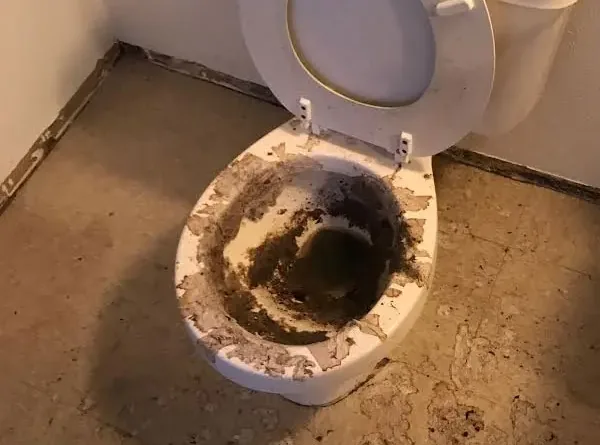
A drain that gurgles, a toilet that rises and a floor drain that spills are all signs of a backup. In Mendota Heights, the city itself describes a simple test that separates a plugged home pipe from a plugged city sewer.
Key takeaways
- If wastewater backs up only when water is being used in the building, the city says the plug is likely in the service pipe and a qualified sewer cleaning contractor should service it.
- If wastewater backs up when no water is being used, the city sewer may be plugged and the city should be called immediately.
- When in doubt, the city says to call Public Works during normal business hours and Dakota County Dispatch after hours.
- Sewer service comes from the city, water service from St. Paul Regional Water, and electric and gas from Xcel Energy.
- Sewage water is contaminated, so porous materials it touches are removed, not dried.
The service pipe test in Mendota Heights
Most households only need to answer one question to point a backup in the right direction: does it happen when water is running, or when nothing is running?
Backup only when water is running
If wastewater backs up only while water is being used in the building, the city says the plug is likely in the service pipe. That is the pipe that carries waste from the building toward the sewer.
A qualified sewer cleaning contractor should service it.
Backup when nothing is running
If wastewater backs up when no water is being used in the building, the city says its sewer may be plugged and the city should be called immediately.
That makes it a shared problem rather than a private one, which is why timing matters.
How a plugged service pipe shows itself
A plug rarely arrives all at once. It builds, and the signs show up at the fixtures first.
These signs fit the city test: they appear when water is being used, which points to the service pipe.
- Drains that slow down at the same time in several fixtures.
- Gurgling in a toilet or tub when the washer drains.
- Water rising in a floor drain or a lower level shower while a fixture upstairs runs.
- A smell of sewer gas near a drain.
Why the lowest fixture shows it first
Wastewater follows gravity. When a pipe plugs, the water rises at the lowest opening, which is usually a floor drain, a lower level shower or a laundry tub.
That is why a finished lower level takes the damage first, and why a backup that reaches carpet and drywall needs a full cleanup rather than a mop.
Who to contact, and what to do while waiting
Utilities are separate here, which is why a backup question and a water shutoff question go to different places.
Writing down when the backup started and which fixtures were affected helps whoever is contacted find the source faster.
- Business hours: the city says to call Public Works.
- After hours: the city says to call Dakota County Dispatch.
- Sewer service is provided by the city, and water service by St. Paul Regional Water.
- Xcel Energy provides electric and gas, so a power concern near wet areas is theirs to answer.
- A plugged service pipe is a job for a sewer cleaning contractor or plumber.
What to do while waiting
Waiting for the cause to be found is the time when a small backup turns into a large one. A few steps keep it from spreading.
- Stop using sinks, toilets, showers, washers and dishwashers.
- Keep children and pets out of the affected room.
- Turn off power to the area if water is near outlets or the electrical panel, but only from a dry spot.
- Do not use a household vacuum on sewage water.
- Photograph the backup, the drain and the rooms it reached.
Why sewage water is treated differently
Water from a backup is contaminated. It carries bacteria and waste, so the response treats it as a health matter as well as a water matter.
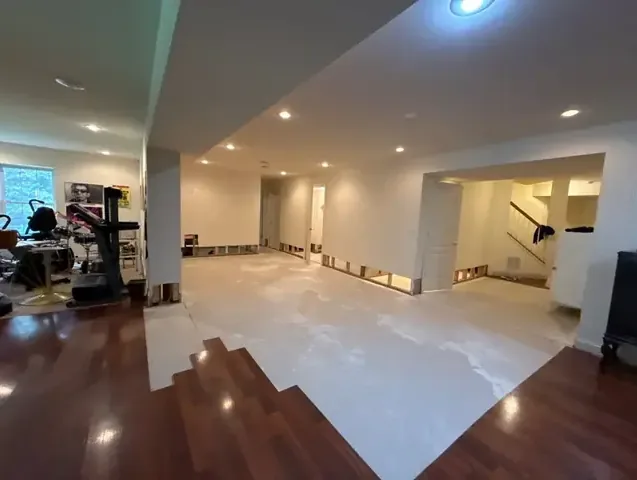
Porous materials that soaked in it, such as carpet, pad, drywall and insulation, are removed. Hard surfaces are cleaned and disinfected.
Protecting health during cleanup
The goal is to finish with surfaces that are clean, treated and dry, and with no contaminated material left inside walls or under floors.
- Gloves, boots and eye protection for anyone entering the area.
- Contaminated materials are bagged and removed, not carried through clean rooms.
- Air movement is managed so odors and particles do not spread.
- Household members who are most vulnerable, including infants and anyone with a weak immune system, stay out of the work area.
How the cleanup works
Every surface the water touched is treated, including baseboards, the bottoms of walls and the underside of cabinet bases.
Containment and extraction
The affected area is contained so contamination does not spread to clean rooms. Sewage backup cleanup then removes standing water and waste with pumps and wet vacuums.
Water extraction follows for any clean rooms that took spillover.
Cleaning, treating and drying
Surfaces are washed, treated with an approved disinfectant and dried. Moisture readings confirm that framing and concrete have returned to normal.
Structural drying equipment stays in place until the numbers match a dry reference.
After the backup: causes, records and prevention
The city Engineering Department handles sanitary sewer cleaning and televising as part of its projects, which is background for a homeowner whose problem seems to be on the city side.
Repeat backups are a reason to ask the sewer cleaning contractor about the pipe itself, because a pipe that has failed once often fails again.
- Keep a record of dates, who was contacted and what the city or contractor found.
- Ask the insurer about sewer backup coverage, which is often separate from other water damage.
- Avoid pouring grease or flushing wipes, which plug drains.
- Have the service pipe inspected if backups repeat.
Common causes of plugs
A sewer cleaning contractor can find which cause applies. For a plug in the city sewer, the city is the contact.
- Grease poured down a kitchen drain cools and hardens inside the pipe.
- Wipes labeled flushable do not break down the way paper does.
- Tree roots can enter a pipe at a joint.
- A collapsed or offset pipe can catch waste.
Questions
How can a homeowner tell whether the city sewer is plugged?
The city says that if wastewater backs up when no water is being used in the building, the city sewer may be plugged and the city should be called immediately.
Who services a plugged service pipe?
The city says a qualified sewer cleaning contractor should service it when the backup happens only while water is being used.
Who is contacted after hours about a backup?
The city says to call Public Works during normal business hours and Dakota County Dispatch after hours.
Is sewage water dangerous to touch?
It carries bacteria and waste, so it should be treated as contaminated. Protective gear and professional cleaning reduce the risk.
Which materials are removed after a sewage backup?
Carpet, pad, drywall and insulation that soaked in the water are usually removed. Concrete, block and framing are cleaned, treated and dried.
Why does a backup show up in the lower level first?
Wastewater rises at the lowest opening, so a floor drain, lower level shower or laundry tub is usually where it appears.