Spring river floods in Hastings follow a pattern: snow melts, the Mississippi climbs, and the city starts watching the forecast. The April 2023 flood showed what that looks like for homes along First Street and for the crews who clean up afterward.
Key takeaways
- The Mississippi reached major flood stage at Hastings on April 20, 2023, and was listed at 18.92 feet on April 24.
- The city engineer described moderate flood stage as 17 feet, and city research found that residences on First Street could be affected at 17.7 feet.
- City staff spoke with First Street residents to check that floor drains were plugged so floodwater would not inundate the sanitary sewer.
- River water in a basement is treated as contaminated, so porous materials are usually removed rather than dried.
- Sandbags and poly sheeting slow water at the surface but do not replace a pump and a plan for the lowest floor.
How the April 2023 flood unfolded in Hastings
The city sits near the confluence of the Mississippi, Vermillion and St. Croix rivers, and the Mississippi forms most of its northern border. In April 2023 the river reached major flood stage on April 20.
As of April 24 the river was listed at 18.92 feet. The National Weather Service predicted a crest of about 19.4 feet around April 29, after the predicted crest date had been pushed back several times.
A city report that month said the forecast flood would affect about 10 homes on the north side of First Street on the east side of town, many of which had not sandbagged in past floods.
What drives the forecast
The city engineer said flood forecasts depend on how fast the snow melts, how quickly frost comes out of the ground and any added rain or snow.
Each of those factors can change from one day to the next, which is why the predicted crest date in 2023 moved more than once.
Roads, parks and access during the high water
During the April 2023 flood Lock and Dam Road was closed at Second Street, and there was no public access to much of Jaycee Park and Lake Rebecca.
East Fourth Street went under water. The city placed temporary gravel on the private easement that East Hastings residents use for access so emergency vehicles could get through.
Closed roads change the practical side of cleanup. Pumps, hoses and drying equipment need a way in, so the plan for a flooded home depends on which roads are open.
Why the city asked First Street residents to plug floor drains
A floor drain connects to the sanitary sewer. When floodwater reaches an open drain, it can enter the sewer system and then surface in homes that were otherwise dry.
In April 2023 city staff spoke with residents along First Street to check that their floor drains were plugged. The city also checked key storm sewer locations along the river for damage and to make sure the plugs placed there stayed in place.
- A plugged drain should be checked again as the river rises.
- Plugs are temporary and come out only after the water has dropped and the area is clear.
- Water that comes back up through a drain that was not plugged is sewage water and needs a different cleanup than clean rain.
- Drains in laundry rooms and lower level bathrooms count too, not only the main floor drain.
Sandbags, poly sheeting and acting early
In April 2023 city staff proposed supplying sand, sandbags and poly sheeting, and hauling volunteer filled sandbags to the curb so residents could build barriers on private property.
A barrier protects a doorway or window well, but water also moves through the ground and the foundation. A pump and a plan for the lowest floor still matter.
- Stack bags tightly on a cleared base.
- Poly sheeting laid against the barrier and held down by the bags slows seepage.
- Window wells and basement doors are the weak points of most barriers.
- Keep the pump discharge pointed away from the barrier.
- Do not rely on a barrier alone while power to the lowest level is still on.
When the forecast turns toward First Street
City staff watch National Weather Service forecasts for the Mississippi at Lock and Dam No. 2 closely during spring snowmelt, and homeowners can follow the same forecasts.
Acting early is easier than reacting late, and the steps are simple.
- Move belongings off lower floors and out of window wells.
- Plug floor drains and recheck the plugs as the river rises.
- Set up barriers and sheeting before the crest, not during it.
- Find the main electrical shutoff and make sure everyone in the house knows it.
- Photograph every lower level room while it is still dry.
The first day when river water gets in
Safety first
- Stay out of the water until power to that level is off.
- Photograph the high water mark and the damaged rooms.
- Lift electronics and papers to higher shelves.
- Note where the water entered: a floor drain, a window well or the foundation.
Pumping and removal
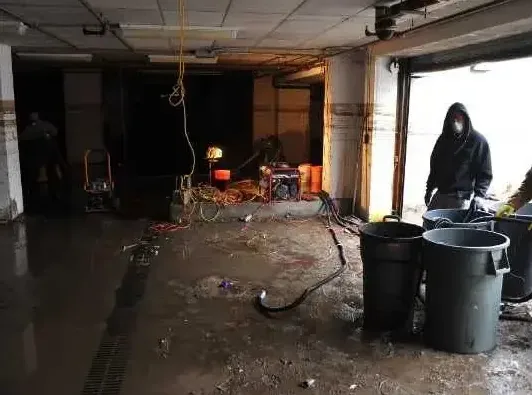
Standing water comes out with pumps and extraction units, and basement flooding cleanup usually begins by lowering the water in stages so the walls are not stressed.
Silt and mud are shoveled out before drying begins. Anything the river left behind keeps the structure wet.
What comes out and what gets dried
Because river water is contaminated, carpet, pad, insulation and low drywall that sat in it are usually removed. Concrete, block walls and framing can be cleaned, treated and dried.
If water also came up through a floor drain, the job includes sewage backup cleanup, which treats every surface the water touched.
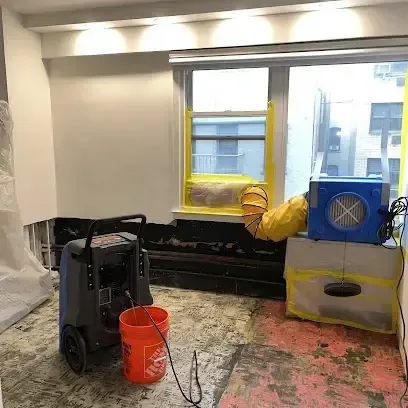
Dehumidifiers and fans then work while moisture readings are logged until framing and concrete match a dry reference.
Using the flood stages as a planning tool
City research from 2019 found that city infrastructure could be affected at a river stage as low as 15 feet, and that residences on First Street could be affected at 17.7 feet.
Those numbers give homeowners a way to read a forecast. When the predicted crest nears 17.7 feet, homes near First Street move from watching to acting.
The storm and river flood cleanup page and the local water damage pages explain what each step involves.
Documenting river damage for a claim
Photographs of the high water mark, the damaged rooms and the plugged drains help an insurance claim. A record of the readings from each visit shows when the structure reached a dry reference.
Many standard homeowner policies treat river flooding separately from other water damage, so the policy wording is worth reading before a spring flood arrives.
Questions
What did the city engineer call moderate flood stage?
The city engineer described moderate flood stage as 17 feet.
When did the river reach major flood stage in 2023?
The Mississippi reached major flood stage on April 20, 2023, and was listed at 18.92 feet on April 24.
Why plug floor drains before a river flood?
An open drain can let floodwater enter the sanitary sewer. In April 2023 city staff checked that First Street floor drains were plugged for that reason.
Is river water in a basement contaminated?
Yes. It is treated as contaminated, so soaked porous materials are usually removed instead of dried.
Do sandbags stop all river water?
No. They slow water at the surface, but seepage through the ground and the foundation still needs a pump and a plan.
Which roads closed during the April 2023 flood?
Lock and Dam Road was closed at Second Street, and East Fourth Street went under water. The city placed temporary gravel on a private easement in East Hastings so emergency vehicles could get through.