
When Mississippi backwater rises in Cottage Grove, the trouble starts slowly and then arrives fast. A road closes, a yard fills, and river water finds the lowest floor of a house before anyone expects it.
Key takeaways
- River water is treated as contaminated, so soaked carpet, pad and low drywall are usually removed instead of dried in place.
- In June 2024 the city closed the Grey Cloud Trail bridge and then the Grey Cloud Drive causeway, and it handed out sandbags.
- The Grey Cloud Island bridge closes for high water every five to ten years, and the river can rise several feet in a few days.
- Sandbags slow water at the surface but do not stop seepage through floor drains, slab cracks and wall joints.
- A lower level is dry when readings in framing, block and concrete match a dry reference, not when the surface feels dry.
Why Mississippi backwater matters in Cottage Grove
The city sits on the north bank of the Mississippi River, north of where the St. Croix joins it. About 10 percent of the city area is water, which means plenty of waterfront, backwater and low ground.
The Grey Cloud Island bridge crosses Mississippi backwater just upstream of Lock and Dam 2. Public works closes it for high water every five to ten years, and the river can rise several feet in a few days.
That pace is what catches households off guard. A yard that is dry at the start of a week can hold standing water by the end of it.
What a rising river does to a house
Water does not need to reach the house itself to cause damage. It saturates the soil, pushes up through floor drains and cracks, and fills the lowest level from below.
By the time surface water arrives at the foundation, the basement may already hold standing water of its own.
Why speed matters more than height
A slow rise gives a household time to move belongings and shut off power. A fast rise leaves only a few decisions, and the best ones are made before the water is visible.
What June 2024 showed
In June 2024 the river rose near Lower Grey Cloud Island. The city closed the Grey Cloud Trail bridge, then the Grey Cloud Drive causeway, and handed out sandbags to residents.
Those steps describe a typical river event. Access to the island is cut first, and low properties begin preparing while the water is still coming up.
Sandbags and levees
River Acres is a low lying, flood prone riverfront neighborhood, and in a flood year volunteers there built sandbag levees.
A levee slows surface water and buys time. It does not seal a house, because water also arrives through floor drains, slab cracks and the joint where wall meets floor.
- Sandbags work best when stacked tight on a cleared, flat base.
- Plastic sheeting laid against the barrier and held down by the bags slows seepage.
- A pump and a plan for the lowest floor are still needed behind the barrier.
- Standing water near outlets or the electrical panel is a reason to stay out until the power is off.
The first day after river water gets in
River water carries silt, sewage and debris, so the first day is about safety and speed.
Before touching anything
- Keep out of standing water until the power to that level is off.
- Photograph the high water mark, the damaged items and each room before anything moves.
- Lift electronics, papers and small valuables to higher shelves.
- Keep household electrical items away from wet floors.
What the crew does first
Standing water comes out first with pumps and water extraction units. On a flooded lower level the water is usually lowered in stages, because saturated soil outside still pushes against the walls.
Mud and silt are shoveled out and hauled away before drying equipment goes in. Silt left behind keeps the structure wet and the odor alive.
What comes out, and what to do about the silt
River water changes the rules for soft materials. Carpet, pad, insulation and low drywall that sat in it are usually removed, not dried in place.
Hard materials are different. Concrete, block walls, framing and subfloor can be cleaned, treated and dried.
The storm and river flood cleanup process sorts each material by what it is and how long it stayed wet.
- Carpet and pad: removed and discarded.
- Drywall and insulation: cut out above the high water mark with a margin for wicking.
- Framing and subfloor: cleaned, treated and dried until readings match a dry reference.
- Furniture and belongings: judged one item at a time, with solid wood and hard goods the best candidates for cleaning.
Mud, silt and the smell afterward
River silt is fine and slick when wet and cakes into a crust when it dries. Left in place, it holds moisture against floors and walls and carries an odor that spreads through the house.
Removal is done by shoveling, scraping and washing before any drying equipment goes in.
- Wet silt is lifted out while it is still soft, which is far easier than chipping it off later.
- Floors are washed and treated after the silt is gone.
- Air scrubbers and ventilation help clear odor once the sources are removed.
- Upholstered furniture that trapped silt in its seams is judged one piece at a time.
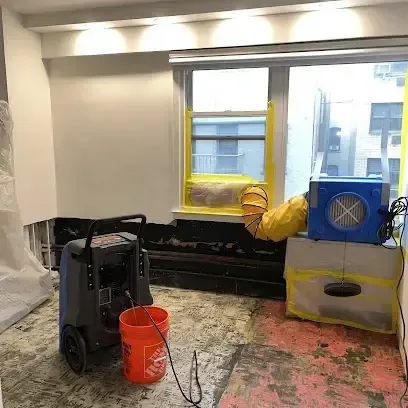
Drying a lower level after the river leaves
Once water and silt are out, dehumidifiers and fans run while moisture readings are logged on each visit. The basement flooding cleanup work follows those readings rather than a calendar.
Block walls and concrete slabs hold water the longest, so they are usually the last materials to reach target.
The goal is a reading that matches a dry reference, not a surface that feels dry to the hand. Stopping early leaves moisture inside the wall, where it keeps causing damage.
Getting ready before the next rise
Households near Grey Cloud Island and in River Acres know the bridge closes every five to ten years. That makes preparation a job for calm weather rather than a scramble.
- Know where the main electrical shutoff is and who in the house can reach it.
- Keep a short list of what lives on the lowest floor so it can be moved fast.
- Move vehicles and outdoor equipment away from low ground before the water arrives.
- Store sandbag material and plastic sheeting where it can be reached.
- Ask the insurer whether the policy covers river flooding, because flood is often handled separately from other water damage.
Photos and records that help a claim
Pictures of each room taken now make a claim easier later, and pictures taken during the flood show what the water reached.
A simple record of what was moved, what was removed and what the readings showed on each visit keeps the story clear for an adjuster.
Questions
Is river water handled differently from rain water in a basement?
Yes. River water carries silt, sewage and debris, so it is treated as contaminated. Porous materials that sat in it are usually removed.
Can sandbags keep river water out of a house?
They slow water at the surface. Seepage through floor drains, slab cracks and wall joints still needs a pump and a plan for the lowest level.
How fast can the Mississippi rise near Grey Cloud Island?
The river can rise several feet in a few days once the dam reaches a set point. That is why public works closes the bridge for high water every five to ten years.
What is River Acres?
River Acres is a low lying riverfront neighborhood where volunteers have built sandbag levees in a flood year.
How is a flooded lower level known to be dry?
Moisture readings in framing, block walls and concrete are compared with a dry reference. A surface that feels dry is not enough.
Can furniture that sat in river water be saved?
Solid wood and hard goods can often be cleaned. Upholstered pieces and particleboard that soaked in river water are usually discarded.