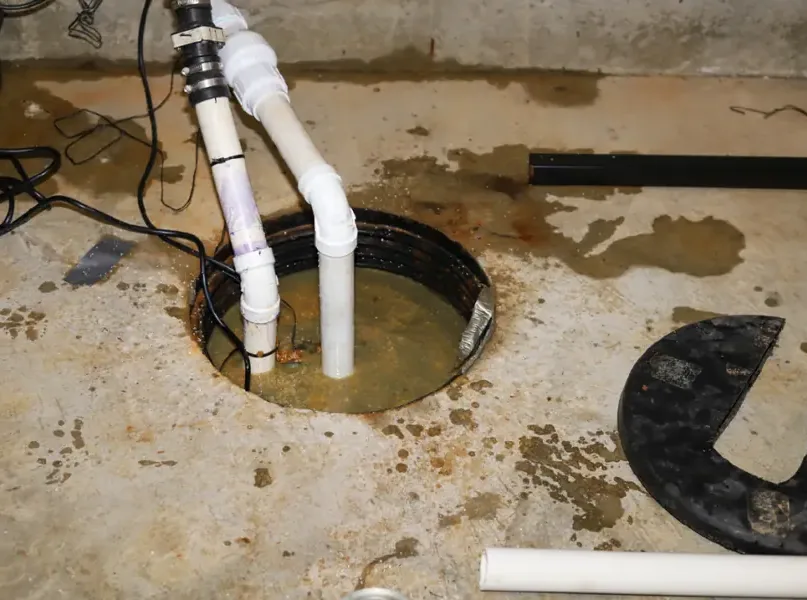
On August 29, 2024, a fast moving storm brought torrential rain, flash flooding and strong winds to Cottage Grove, and the mayor declared a local emergency. That kind of storm is exactly when a sump pump has to work, and when failures show up.
Key takeaways
- A fast moving storm on August 29, 2024 brought torrential rain, flash flooding and strong winds, and the mayor declared a local emergency.
- A sump pump can fail from a power cut, a stuck float, a blocked discharge pipe, a worn out motor or sheer volume.
- The first steps are to make the area safe and remove water before it reaches walls and floors.
- Wet drywall, carpet and pad are removed or dried based on moisture readings.
- Testing the pump on a dry day is the simplest protection against the next storm.
What the August 29, 2024 storm brought
The storm moved fast and brought torrential rain, flash flooding and strong winds. The mayor declared a local emergency.
Fast storms are hard on basements because the ground gets more water than it can absorb in a short time. A sump pump that works fine in ordinary rain may be asked to move far more water than usual.
A storm like that tests every part of a home's water defense at once: gutters, downspouts, window wells, grading and the sump pump.
How a sump pump pit works
A sump pit collects groundwater from around the foundation. When water rises, a float switch starts the pump, which sends the water outside through a discharge pipe.
Everything in that chain has to work: power, switch, pump, check valve and discharge. A failure at any point lets the pit fill and spill.
How a sump pump fails
Most failures are simple, and most show up in the one storm that matters.
- Power loss: strong winds and storms can knock out electricity, and a plain pump stops with it.
- A stuck or tangled float switch, which keeps the pump from starting.
- A clogged or blocked discharge pipe, which sends water back or stops the pump.
- A worn out pump, especially one that has run constantly for years.
- Sheer volume: the pit fills faster than the pump can empty it.
Wind, power and the sump pump
The August 2024 storm included strong winds. Strong winds can bring down tree limbs and cut power, and a pump that runs on household power stops when the lights go out.
- Check whether the pump sits on its own outlet and whether a breaker has tripped.
- A tripped GFCI outlet is a common reason for a silent pump.
- A generator or battery backup keeps the pump going if power stays out for longer.
When the pit overflows: how far water travels and what comes first
How far the water travels
Water that spills from the pit spreads across the slab and under walls, reaching every room at the same level.
Drywall wicks water upward, and cardboard boxes, rugs and furniture on the floor soak it up quickly.
Items stored on the floor are often the first loss, and the easiest to prevent by moving them to shelves.
Make the area safe
- Do not enter water that may touch outlets, cords or the electrical panel.
- Have power to the basement turned off from a dry spot.
- Move valuables off the floor and up the stairs.
- Photograph the water and the pit before anything is moved.
Remove water as fast as it arrives
If groundwater is the source, nothing can be shut off, so the work is to remove water as fast as it arrives. Portable pumps and water extraction units take over from the failed pit pump.
A sump pump failure cleanup also checks why the pump stopped, so the next storm does not repeat the same failure.
What extraction and drying cover
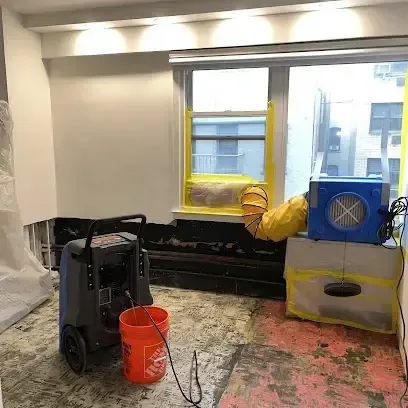
After the water is out, the crew opens what is wet. Carpet pad comes up, drywall is cut back to dry readings, and baseboard is removed so walls can dry from the bottom.
The basement flooding cleanup process then runs dehumidifiers and fans while readings are logged on each visit.
Finished basements take longer than unfinished ones, because carpet, drywall and trim all have to be checked. Bare block and concrete hold water longest, so they are the last surfaces to reach a dry reading.
- Clean groundwater is treated differently from water that came through a floor drain.
- Water that came up through a drain is handled as contaminated, and porous materials it touched are removed.
- Concrete, block and framing are dried in place and checked against a dry reference.
When the storm is bigger than the pump
Some storms overwhelm even a healthy pump. When a storm brings flash flooding, water can enter through window wells, doors and floor drains at the same time as the pit fills.
In those cases the storm and river flood cleanup work treats the water as contaminated and removes porous materials rather than drying them.
Preparing a sump pump for the next storm
A short check on a dry day shows whether the pump will start when it has to.
The pump is worth checking after every heavy rain, not only before the season starts.
- Pour water into the pit to confirm the float lifts and the pump starts.
- Clear the discharge pipe and check that it empties away from the house.
- Consider a battery backup for a power cut.
- Listen for a pump that runs nonstop or rattles.
- Keep stored items off the basement floor.
Backup power and alarms
A water alarm near the pit gives a warning before the floor is wet, and a battery backup keeps a pump running through a power cut. Neither one replaces a pump that is checked on a regular schedule.
- Battery backups run the pump for a limited time and need their own testing.
- A second pump on a separate float adds capacity.
- A discharge pipe that empties well away from the foundation keeps water from cycling back.
What to ask the insurer
Sump pump overflow and sewer backup are often covered by an optional add on rather than the base policy, so the wording is worth checking before a storm.
Photographs of the pit, the water and the damaged items taken at the time help the claim.
Questions
What happened in Cottage Grove on August 29, 2024?
A fast moving storm brought torrential rain, flash flooding and strong winds, and the mayor declared a local emergency.
Should a flooded basement be entered right away?
No. Water can touch outlets, cords or the panel, so power should be off first, switched from a dry spot.
Is groundwater in a basement contaminated?
Groundwater from the pit is usually treated as less contaminated than sewage, but water that came through a floor drain is handled as contaminated.
How often should a sump pump be tested?
Testing it on a dry day, and again before a forecast storm, shows whether the float and pump still work.
Does a battery backup replace a working pump?
No. It keeps a pump running through a power cut, but the pump, float and discharge still have to work.
How long does a flooded basement take to dry?
It depends on the materials and the water, and readings decide when it is done. Block walls and concrete take the longest.